AI and the Creative Economy
Artists and content creators confront disruption, legal uncertainty, and shifting norms
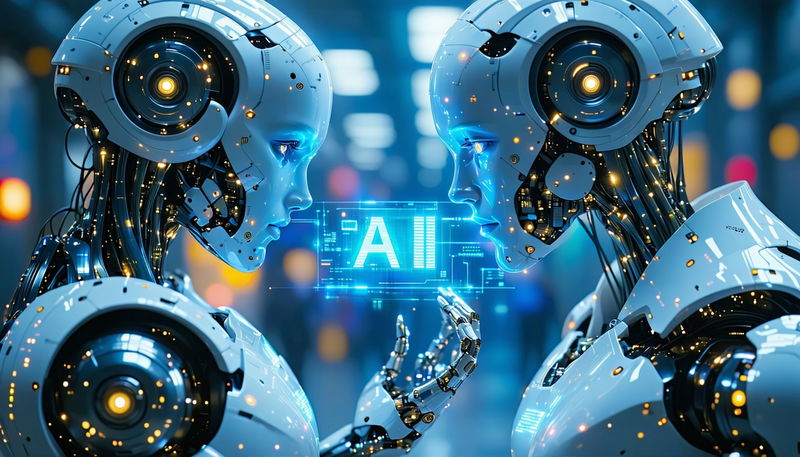

When generative artificial intelligence tools went mainstream in late 2022, they were introduced as creative accelerators, software capable of producing illustrations, scripts, music, and video in seconds. Companies described them as collaborative tools. Investors called them transformative.
For many working artists and content creators, however, the technology introduced something else: instability.
As AI systems become more capable and widely adopted, debates intensify over copyright, labor, ethics, and the creative economy's long-term health.
Training data at the center of legal disputes
How AI systems learned from online culture
Most generative AI models were trained on massive datasets compiled from publicly available online material, including artwork, photography, writing, and audiovisual content. That process now faces lawsuits and regulatory scrutiny in multiple countries.
At the heart of the issue is consent. Many creators argue their work was used without permission or compensation to train commercial systems. AI developers generally counter that large-scale data training constitutes fair use or transformative use under existing copyright frameworks.
Courts have yet to deliver definitive rulings to clarify the boundaries. Until they do, uncertainty will remain.
Economic pressure in freelance markets
“Good enough” automation changes client behavior
Industry observers report that some sectors of freelance creative work, including concept art, stock illustration, copywriting, and background music, are already seeing downward pressure on rates.
Clients experimenting with AI-generated outputs often describe them as “good enough” for certain commercial uses. That shift does not eliminate all human involvement, but it can reduce demand for entry-level or mid-tier commissions.
Economists note that technological disruption historically reshapes labor markets rather than eliminating them entirely. However, transitions can be uneven, and independent workers tend to absorb the shock first.
The debate over style and authorship
Can a visual identity be protected?
Unlike direct copying, generative AI frequently produces new works that resemble the recognizable style of living artists without replicating a specific original piece.
Current copyright law protects specific expressions but does not clearly protect “style” itself. This legal gray area has sparked debate about whether new frameworks are needed to address reputational and economic harm tied to stylistic imitation.
For artists whose livelihoods depend on distinctive aesthetics, the distinction between inspiration and algorithmic replication feels increasingly blurred.
Transparency and disclosure challenges
Who created the work and how?
As AI-assisted and AI-generated content becomes more common, platforms are grappling with questions of a labeling and attribution. Some companies have introduced voluntary disclosure policies; others are testing watermarking systems.
Critics argue that inconsistent standards undermine trust and make it difficult for audiences to understand content origins. Supporters of lighter regulation warn that overly strict labeling requirements could stifle experimentation.
Lack of uniform rules leaves creators and consumers navigating an evolving information landscape.
Ethical risks beyond economics
Deepfakes and reputational harm
Generative tools have also raised concerns about misuse, including the production of realistic but fabricated images or audio of real individuals. Cases involving nonconsensual explicit imagery and impersonation have intensified calls for stronger safeguards.
Lawmakers in several jurisdictions are exploring targeted legislation addressing synthetic media. Experts emphasize that technological innovation must be accompanied by enforceable protections to mitigate abuse.
A cultural inflection point
Tool, threat, or transformation?
Not all creators oppose AI. Some incorporate generative tools into their workflows to accelerate brainstorming or automate repetitive tasks. Others see opportunities for new hybrid art forms that combine human direction with machine assistance.
The central question may not be whether AI belongs in the creative process, but under what conditions it does so.
Policymakers, courts, platforms, and industry groups now face pressure to establish clearer standards for consent, compensation, and accountability. The outcome of these decisions will shape whether AI becomes a collaborative instrument or a destabilizing force in the arts.
The creative sector currently stands at a crossroads, navigating rapid technological change without a settled rulebook.
Comments
No comments yet. Be the first to comment!